Showing posts with label HART. Show all posts

Sunday, July 26, 2015

May 2013 Kanehili Hui Comments Sent To Hawaii State Preservation Division Regarding Rail Lawsuit

May 2013 Kanehili Hui Comments Sent To Hawaii State Preservation Division Regarding Rail Lawsuit


Extensive Testimony and Comments Delivered To SHPD
SHPD Confirmation of Receipt of Comments on Honolulu Rail AIS May 31, 2013

by John Bond,   Kanehili Cultural Hui

Aloha,

The ruling of Federal Judge Wallace Tashima on the City rail lawsuit made a special point of noting his concern about the identification of TCP's along the HART rail route. It was later made clear in recent HART meetings that TCP's include ALL CULTURES, not just native Hawaiian, as per Federal law that SHPD, HART and FTA must follow. A great deal was left out of the original 2009 AIS (Archaeological Inventory Survey) of Honouliuli-Ewa that these new comments and documents hope to correct.

The Federal FTA HART rail project is required to also adhere to what is known as "Section 4f." Department of Transportation Act of 1966 special provision - Section 4(f) - which stipulated that DOT agencies- including FTA, cannot approve the use of land from wildlife and waterfowl refuges, public or private historical sites unless the following conditions apply:
1. There is no feasible and prudent alternative.
2. The action includes all possible planning to minimize harm to the
property resulting from use.

Mike Lee, along with Hawaii Thousand Friends, submitted approximately 800 pages of detailed comment and testimony on the the HART Rail AIS- the entire 22 mile route. This package included maps, photographs, emails with many agencies (HART, SHPD, DLNR, BLNR, OIBC, HCDA, etc.)
that go back nearly a decade, as well as news articles, historic research and citations, legal documents and filings, native Hawaiian rights, the Clean Water Act, and much more.

A key issue for Mike Lee is the identification of the ancient coral reef limestone along the Oahu shoreline known as Karst, which connects volcanic mountain lava tube water to the shoreline Karst reef water systems. These water springs feed a shoreline ecosystem and was how ancient Hawaiians managed their fish ponds. The Karst was also of very high spiritual importance to ancient Hawaiians and used for sacred burials, such as downtown Honolulu on the grounds of I'olani Palace where there is an ancient Karst burial cave.

"I wanted them to know that I wasn't just making this up ten minutes ago" said Hawaiian cultural practitioner Mike Lee. "I am a Konohikist- I believe in the ecological management and protection of our very important natural island water systems. Protecting our Wahi Kapu sites is also very important to me "

The Mike Lee testimony and comments concern identification and protection of important Hawaiian cultural sites along the rail route, including wahi pana (sacred sites) and wahi kapu (sacred burial areas) and their inclusion into a TCP (Traditional Cultural Properties) that would make sure these special sites, caves, caverns, springs, ponds and water systems are preserved and not contaminated during rail construction.

Also included were photographs of Kawaiaha'o Church which is a graphic example of early Karst limestone block construction. The church and surrounding walls are made of rough ancient reef from the shoreline and ancient sea shells and marine organisms can be clearly seen. The church is also located on the site of an important ancient Karst spring. Nearby I'olani Palace and the royal guard barracks are also constructed from Karst limestone blocks from the shoreline.

In addition, Kanehili Cultural Hui also submitted another approximately 250 pages of detailed comment and testimony on the the HART Rail AIS- primarily concerned with the Honouliuli-Ewa area and the documentation of previously unidentified Traditional Cultural Properties (TCP), Ewa Historic Districts, Ewa Dec 7, 1941 Battlefield Area and an outline for a Honouliuli-Ewa Cultural Landscape Report. Many current or former Ewa Village residents helped by supplying historic documents, maps, photos and oral histories.

The Kanehili Hui name comes from the original Hawaiian name for the Honouliuli-Ewa area and is mentioned by Hawaiian goddess Hi'iaka in her famous and often quoted chants when she traveled through the Ewa Plains area aprroximately 1000 years ago. The Kanehili Cultural Hui 501-c-3 non-profit community organization is concerned with the entire cultural history of the area- from ancient times to modern times.

A key focus of the Kanehili Cultural Hui report and testimony was on the 1825 Malden Trails (ancient Hawaiian Trails- believed to have possibly been originally constructed by very early Tahitian arrivals to Kanehili) which played a major role in the Hawaiian cultural history of the Honouliuli-Ewa area, and which was ENTIRELY LEFT OUT of the HART Rail AIS. The fixed guideway and stations directly overlay the 1825 trails as well as the Kalo'i Karst waterway that flows to the Ewa shoreline.

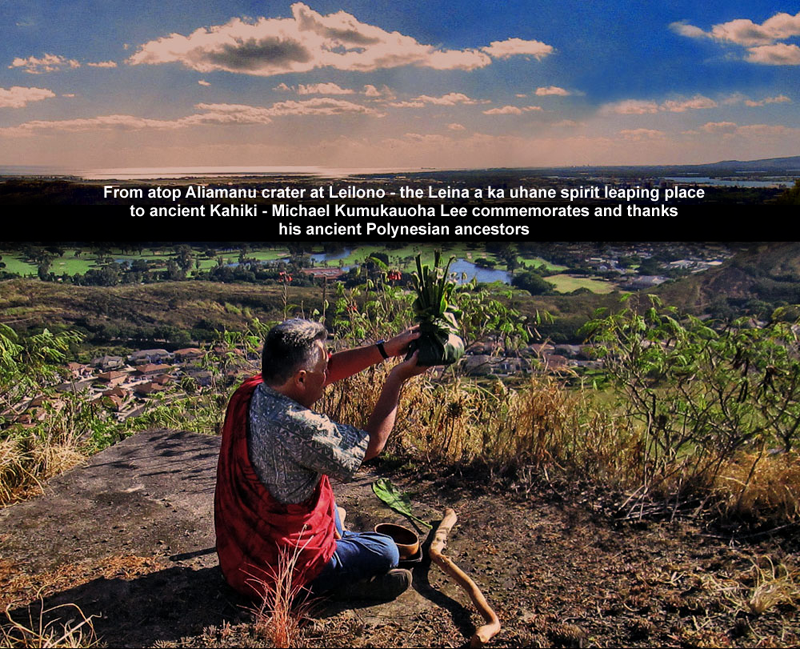
Also of major importance is the identification and location of the Leina a ka Uhane, a sacred spiritual leaping off place for souls returning to the ancient homeland of Tahiti. This is a National Register eligible TCP, yet HART and the SHPD administrator has continuously tried to minimize the importance and geographic area of this TCP as well as apparently intentionally misidentify its location, despite the error being brought to their attention several times since last year.

The previous Rail AIS also failed in many ways to adequately document important Honouliuli-Ewa cultural sites such as the greater Ewa Plantation and railway network that was the largest private railway in Hawaii. The Oahu Railway that served Honouliuli-Ewa plantation railway was chartered under King David Kalakaua.

A Cultural Landscape Report (CLR) is the primary report that documents the history, significance and treatment of a cultural landscape. A CLR evaluates the history and integrity of the landscape including any changes to its geographical context, features, materials,and use.

John Bond
Kanehili Cultural Hui

---------- Forwarded message ----------
From:  <Susan.A.Lebo@hawaii.gov>
Date: Fri, May 31, 2013 at 9:17 AM
Subject: Confirmation of Receipt of Comments on Honolulu Rail AIS

Hello John,

I'm writing to confirm receipt of your public review comments on the
HART AIS via in-person delivery at 3:02pm 5/30/2013.

Thank you in advance for your public comment.

Sincerely,

Susan

Susan A. Lebo, PhD
Oahu Lead Archaeologist
State Historic Preservation Division
Kakuhihewa Building
601 Kamokila Blvd., Suite 555
Kapolei, Hawaii 96707
Susan.A.Lebo@hawaii.gov
(808) 692-8019

###################################################### 

Ewa Plantation Prime Ag Land Still Retains Centuries Old Traditional Agricultural Features

West Oahu Residents Speak Out At Important Ag Lands And Hoopili Station Meetings


FTA and HART Rail Misrepresent The True Ewa Honouliuli Native Hawaiian Spirit Pathway


Honouliuli Ewa TCP's Are Important Wahi Pana (Sacred Places) On Multi-Dimensional Levels


Honouliuli Ewa's Makakilo Kalo'i Gulch - A Rare In Depth Survey Of This Important Cultural Property

Tuesday, January 6, 2015

Voice of Kapolei - Ewa Plain Sacred Trails

Voice of Kapolei - Ewa Plain Sacred Trails

By John Bond   Kanehili Cultural Hui   November 30, 2012


The recent Federal ruling on Rail stated that the City and HART FAILED to adequately identify TCP's (Traditional Cultural Places) along the Honolulu Rail route corridor.

In fact, HART has published a map where the extremely important 1825 Malden Trails were ERASED to show that NOTHING was "there" on the Ewa Plains where the railway line and stations are located.
Yet- under a HART TCP contract there WAS the identification of the extremely important Hawaiian "Leina a ka Uhane" - (Spiritual jumping off place) in this same Ewa Plains location.
 
So HOW could HART neglect to show the extremely important trails that the Royal Navy in the early 1800's felt were so visible and prominent that they were featured on one of the very first major maps of Oahu (and which show up on later published maps throughout the 1800's.)?

How did the THOUSANDS of people who were buried along this sacred Ewa wahi pana route get there?

WHERE did Hawaiians have their very important Makahiki processions and where did Hawaiian Alii travel along to go to the Ewa shoreline?

These were MAJOR Oahu Hawaiian trails and evidence of them STILL EXISTS- but developers are anxious to get there FIRST with SHPD approvals so that they can be forever wiped out.
 
HART RAIL Will Run Directly Though Most Sacred National Register Burial/Battlefield Sites

HART has intentionally HIDDEN this TCP information and the news media has failed to report this.

The news media not surprisingly would NOT do a story on a site where a HART TCP contractor stated contained hundreds if not THOUSANDS of iwi kupuna burial sites...

I recently obtained this 1878 trail map. It includes ORIGINAL published maps like this one and the 1825 Royal Navy Malden survey map - which I also now have in high resolution from the originals.

I used Photoshop to match up the 1878 trail map with a 1962 USGS map based upon an earlier archeological research report done for the US Navy BRAC in 1997-99 by the Tuggles (contracted archeologists.)

The Historic Malden Trail - Oneula Route- runs though MCAS Ewa Field, Ewa battlefield, Hunt Panhandle and by Barbers Point Riding Club stables revetments.

I also believe now that the original surveyors of the 1925 Ewa Mooring Mast located the tower near this same trail intentionally.

And the trails influenced the location the the Ewa Mill Plantation, which also influenced the route of the Oahu Railway line, which influenced the location of the Ewa Mooring Mast, etc...

The other Kualaka'i section runs by the MCAS Ewa Field Ewa Field Historic Warehouse district area (which still shows evidence of this trail) and down what was originally called Henderson Rd. and then on down to the US Coast Guard station where the Kualaka'i village was.

The Kualaka'i section of the Malden Trail runs exactly through where Shad Kane's well preserved ancient Hawaiian trail area is.

Scaling used Puu Kapolei, Onelua Beach and related landmarks to match the 1878 map to the 1962 USGS map.

Without out a doubt these are Oahu's most important and sacred trails and very likely used for annual Makahiki processions and likely for special Alii burial processions as part of the Kanehili "Leina a ka Uhane" wahi pana.

HART RAIL Will Run Directly Though These Most Sacred National Register Burial/Battlefield Sites but they don't want ANYONE to know.

##################################################### 

Ewa Plantation Prime Ag Land Still Retains Centuries Old Traditional Agricultural Features

West Oahu Residents Speak Out At Important Ag Lands And Hoopili Station Meetings


FTA and HART Rail Misrepresent The True Ewa Honouliuli Native Hawaiian Spirit Pathway


Honouliuli Ewa TCP's Are Important Wahi Pana (Sacred Places) On Multi-Dimensional Levels


Honouliuli Ewa's Makakilo Kalo'i Gulch - A Rare In Depth Survey Of This Important Cultural Property


Monday, December 22, 2014

Ho'opili Project Is Definition Of Insanity - From Transit System To Really Massive Land Development Scheme

Ho'opili Project Is Definition Of Insanity - From Transit System To Really Massive Land Development Scheme

John Bond,  Kanehili Cultural Hui

You have to really wonder why so many experts in soil science, traffic, farming and three former governors OPPOSED the Ho'opili Project. The main PROPONENT for Ho'opili was Ex-Governor Abercrombie and we all know how popular he became after shoving it forward in 2012 with his pro-developer stacked Land Use Commission panel.

H-1 is already a total nightmare and this project will way OVERBUILD West Oahu adding 12,000 more homes on top of many other large home and land development projects. This will literally create a major environmental DISASTER with completely grid locked traffic. Absolutely everything is BAD about this project because it also paves over West Oahu's best farmland and creates massive polluted water runoff that will be directed either into Pearl Harbor or the offshore reef system.

Just for those who don't know, the REAL NAME for this area is not Ho'opili but instead Honouliuli which was a 1000 year old native Hawaiian food bread basket and traditional cultural place (TCP) supporting the largest Hawaiian population on the island of Oahu.

http://www.stophoopili.com/watch-testimony.html

Honouliuli farm lands are the Golden Triangle of deep rich chocolate brown volcanic soil fed by a multitude of natural freshwater springs from the Waianae mountains. It remains an ideal location for high volume fresh farm vegetables and sustainable agriculture today and covering it with concrete and asphalt will literally be a crime against the public.

All open areas of the Ewa Plain are now being filled in with buildings, concrete and asphalt. All this polluted surface water has to run off through gutters into either the ocean or permanent holding ponds.


Nearly all of the once bountiful ocean resources are
being killed off around the Ewa Plain...It's becoming a huge, polluted, traffic 
choked nightmare with continuous building approvals by City and State government officials.


This last open farmland area will soon be filled in with buildings, asphalt and concrete. When this was sugar cane fields the water naturally percolated back into the karst aquifer.

FTA and HART Failed To Recognize 

Federal Judge Ruling On Rail Route TCP's


Honouliuli Ewa's Makakilo Kalo'i Gulch - A Rare In Depth Survey Of This Important Cultural Property


Honouliuli Ewa TCP's Are Important Wahi Pana (Sacred Places) On Multi-Dimensional Levels


FTA and HART Rail Misrepresent The True Ewa Honouliuli Native Hawaiian Spirit Pathway


West Oahu Residents Speak Out At Important Ag Lands And Hoopili Station Meetings


Ewa Plantation Prime Ag Land Still Retains Centuries Old Traditional Agricultural Features


A Tomb Stone To A 1000 Year Old Native Hawaiian Traditional Cultural Place


Sunday, August 11, 2013

Honolulu Votes To Desecrate, Destroy Important Hawaiian Cultural Site

City Council, Mayor of Honolulu Votes To Desecrate And Destroy Important Hawaiian Cultural Site With Bill 65

 By John Bond, Kanehili Cultural Hui

Federal EIS Document Shows Location and Importance Of Major Hawaiian Burial Site
All historic and cultural research shows that this Honouliuli-Ewa area is one of the most very important cultural and historic area's in the State of Hawaii. The identified "Leina a ka Uhane"
is an especially sacred wahi pana of the highest level. A HART EIS TCP (Traditional Cultural Place) report in April 2012 documents this.


One could almost say with certainty that there appears to be a sacred "cosmic alignment" of Hawaiian cultural history and western history in this special TCP area. The major aviation fields, beginning with the 1925 Mooring Mast Field, all have in common with the ancient Hawaiian Leina belief, a "spirit leaping" or "flying away" concept. All pilots know the spiritual aspects of flying a plane.
This ancient area, before it became MCAS Ewa and Barbers Point naval airports, was known as Kanehili, which was very much associated in Hawaiian cultural history with birds-"manu" and for special ceremonial bird feathers. In modern times scientists have found in the many Karst sinkholes and caves of this area the bones of ancient rare birds, including large pre-historic birds too large to fly.
The major 1825 mapped trails show Oahu's largest native population- Honouliuli Ewa- centered around rich, fertile lo'i farmlands, clear fresh streams, Karst springs, and linked to mountain forest resources, abundant and prolific shoreline ponds, fisheries and the best limu in on Oahu. Limu is not only very important as a food and medicine, but also a critically important part of the shoreline ecology that is today being destroyed.
This same area is where the ancient Tahitians arrived and planted the first breadfruit tree. Elaborate trails were built to link the many important Kanehili areas with Honouliuli, and were used for the annual Makahiki ceremonies. Hawaiian goddess Hi'iaka describes a journey through this area nearly one thousand years ago. On certain special nights the legions of ancient Hawaiian warriors, killed in the area's epic land battles, are known to march with torches on these same Honouliuli Ewa spiritual trails.
A large area of the most important, rich and fertile ancient Hawaiian farmland on Oahu, going back 1000 years and supporting Oahu's largest Hawaiian population, where the bones of hundreds of thousands of native Hawaiian farmers and island warriors are buried, will soon be covered over by a Texas corporation forever because of City Bill 65.


FTA and HART Rail Misrepresent The True Ewa Honouliuli Native Hawaiian Spirit Pathway 


Honouliuli Ewa TCP's Are Important Wahi Pana (Sacred Places) On Multi-Dimensional Levels


Honouliuli Ewa's Makakilo Kalo'i Gulch - A Rare In Depth Survey Of This Important Cultural Property


Ewa Plantation Prime Ag Land Still Retains Centuries Old Traditional Agricultural Features

West Oahu Residents Speak Out At Important Ag Lands And Hoopili Station Meetings


Leilono to Kanehili Kaupe’a - Leina a ka uhane – The Spirit Leaping Place

  KANEHILI CULTURAL HUI Leina a ka uhane – The Spirit Leaping Place of Leilono to Kanehili Kaupe’a Archeological sites in Kanehili have clea...