Aloha,
The ruling of Federal Judge Wallace Tashima on the City rail lawsuit made a special point of noting his concern about the identification of TCP's along the HART rail route. It was later made clear in recent HART meetings that TCP's include ALL CULTURES, not just native Hawaiian, as per Federal law that SHPD, HART and FTA must follow. A great deal was left out of the original 2009 AIS (Archaeological Inventory Survey) of Honouliuli-Ewa that these new comments and documents hope to correct.
The Federal FTA HART rail project is required to also adhere to what is known as "Section 4f." Department of Transportation Act of 1966 special provision - Section 4(f) - which stipulated that DOT agencies- including FTA, cannot approve the use of land from wildlife and waterfowl refuges, public or private historical sites unless the following conditions apply:
1. There is no feasible and prudent alternative.
2. The action includes all possible planning to minimize harm to the
property resulting from use.
Mike Lee, along with Hawaii Thousand Friends, submitted approximately 800 pages of detailed comment and testimony on the the HART Rail AIS- the entire 22 mile route. This package included maps, photographs, emails with many agencies (HART, SHPD, DLNR, BLNR, OIBC, HCDA, etc.)
that go back nearly a decade, as well as news articles, historic research and citations, legal documents and filings, native Hawaiian rights, the Clean Water Act, and much more.
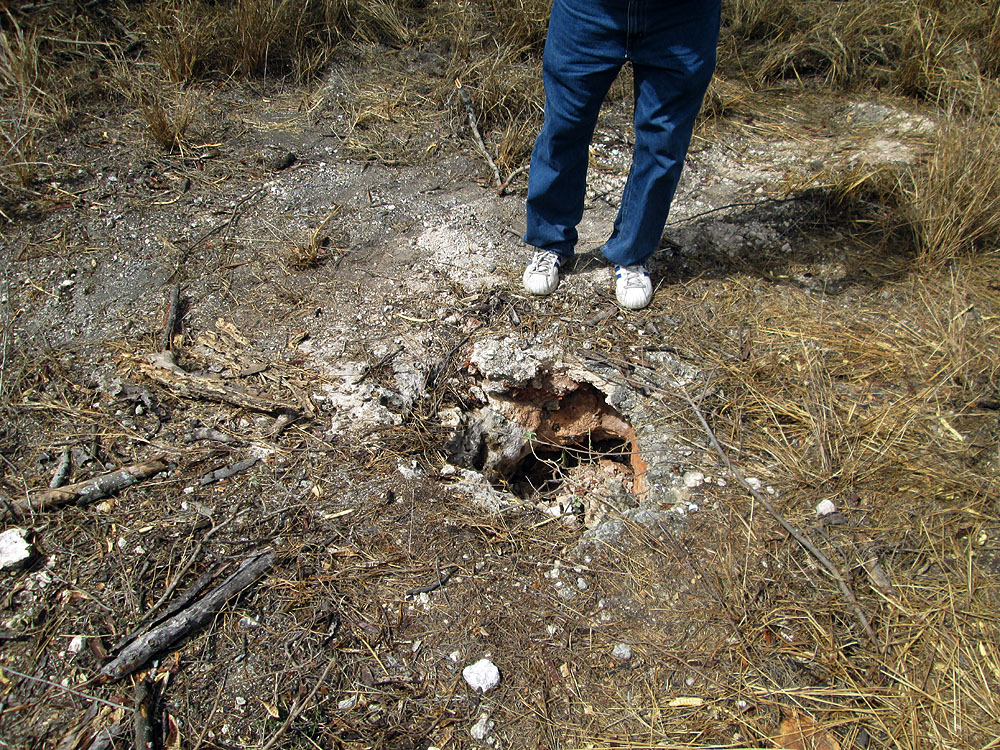
A key issue for Mike Lee is the identification of the ancient coral reef limestone along the Oahu shoreline known as Karst, which connects volcanic mountain lava tube water to the shoreline Karst reef water systems. These water springs feed a shoreline ecosystem and was how ancient Hawaiians managed their fish ponds. The Karst was also of very high spiritual importance to ancient Hawaiians and used for sacred burials, such as downtown Honolulu on the grounds of I'olani Palace where there is an ancient Karst burial cave.
"I wanted them to know that I wasn't just making this up ten minutes ago" said Hawaiian cultural practitioner Mike Lee. "I am a Konohikist- I believe in the ecological management and protection of our very important natural island water systems. Protecting our Wahi Kapu sites is also very important to me "
The Mike Lee testimony and comments concern identification and protection of important Hawaiian cultural sites along the rail route, including wahi pana (sacred sites) and wahi kapu (sacred burial areas) and their inclusion into a TCP (Traditional Cultural Properties) that would make sure these special sites, caves, caverns, springs, ponds and water systems are preserved and not contaminated during rail construction.
Also included were photographs of Kawaiaha'o Church which is a graphic example of early Karst limestone block construction. The church and surrounding walls are made of rough ancient reef from the shoreline and ancient sea shells and marine organisms can be clearly seen. The church is also located on the site of an important ancient Karst spring. Nearby I'olani Palace and the royal guard barracks are also constructed from Karst limestone blocks from the shoreline.
In addition, Kanehili Cultural Hui also submitted another approximately 250 pages of detailed comment and testimony on the the HART Rail AIS- primarily concerned with the Honouliuli-Ewa area and the documentation of previously unidentified Traditional Cultural Properties (TCP), Ewa Historic Districts, Ewa Dec 7, 1941 Battlefield Area and an outline for a Honouliuli-Ewa Cultural Landscape Report. Many current or former Ewa Village residents helped by supplying historic documents, maps, photos and oral histories.
The Kanehili Hui name comes from the original Hawaiian name for the Honouliuli-Ewa area and is mentioned by Hawaiian goddess Hi'iaka in her famous and often quoted chants when she traveled through the Ewa Plains area aprroximately 1000 years ago. The Kanehili Cultural Hui 501-c-3 non-profit community organization is concerned with the entire cultural history of the area- from ancient times to modern times.
A key focus of the Kanehili Cultural Hui report and testimony was on the 1825 Malden Trails (ancient Hawaiian Trails- believed to have possibly been originally constructed by very early Tahitian arrivals to Kanehili) which played a major role in the Hawaiian cultural history of the Honouliuli-Ewa area, and which was ENTIRELY LEFT OUT of the HART Rail AIS. The fixed guideway and stations directly overlay the 1825 trails as well as the Kalo'i Karst waterway that flows to the Ewa shoreline.
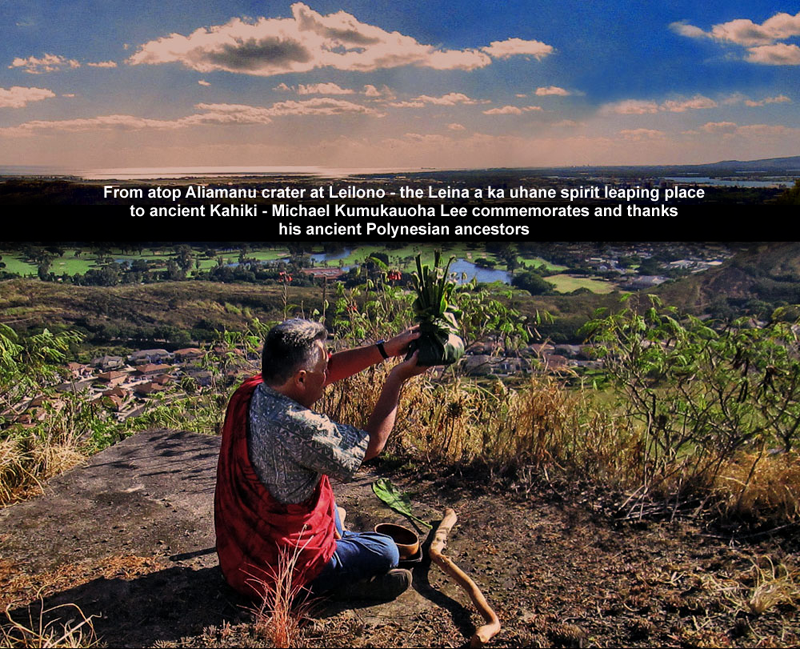
Also of major importance is the identification and location of the Leina a ka Uhane, a sacred spiritual leaping off place for souls returning to the ancient homeland of Tahiti. This is a National Register eligible TCP, yet HART and the SHPD administrator has continuously tried to minimize the importance and geographic area of this TCP as well as apparently intentionally misidentify its location, despite the error being brought to their attention several times since last year.
The previous Rail AIS also failed in many ways to adequately document important Honouliuli-Ewa cultural sites such as the greater Ewa Plantation and railway network that was the largest private railway in Hawaii. The Oahu Railway that served Honouliuli-Ewa plantation railway was chartered under King David Kalakaua.
A Cultural Landscape Report (CLR) is the primary report that documents the history, significance and treatment of a cultural landscape. A CLR evaluates the history and integrity of the landscape including any changes to its geographical context, features, materials,and use.
John Bond
Kanehili Cultural Hui
---------- Forwarded message ----------
From: <Susan.A.Lebo@hawaii.gov>
Date: Fri, May 31, 2013 at 9:17 AM
Subject: Confirmation of Receipt of Comments on Honolulu Rail AIS
Hello John,
I'm writing to confirm receipt of your public review comments on the
HART AIS via in-person delivery at 3:02pm 5/30/2013.
Thank you in advance for your public comment.
Sincerely,
Susan
Susan A. Lebo, PhD
Oahu Lead Archaeologist
State Historic Preservation Division
Kakuhihewa Building
601 Kamokila Blvd., Suite 555
Kapolei, Hawaii 96707
Susan.A.Lebo@hawaii.gov
(808) 692-8019
######################################################
Ewa Plantation Prime Ag Land Still Retains Centuries Old Traditional Agricultural Features
West Oahu Residents Speak Out At Important Ag Lands And Hoopili Station Meetings
FTA and HART Rail Misrepresent The True Ewa Honouliuli Native Hawaiian Spirit Pathway
Honouliuli Ewa TCP's Are Important Wahi Pana (Sacred Places) On Multi-Dimensional Levels
Honouliuli Ewa's Makakilo Kalo'i Gulch - A Rare In Depth Survey Of This Important Cultural Property